Thursday, July 9, 2026

Summer in Motion: Stronger Together for Birds and Communities

Proud of our future leaders in conservation

Trouble viewing this e-mail? Try our web version.

Audubon California
  July 2026 Newsletter  A Million Trike Pings | Speaking up at the Capitol | Seabird Magic | Celebrating 30 Years | Plover Chicks | Salton Sea
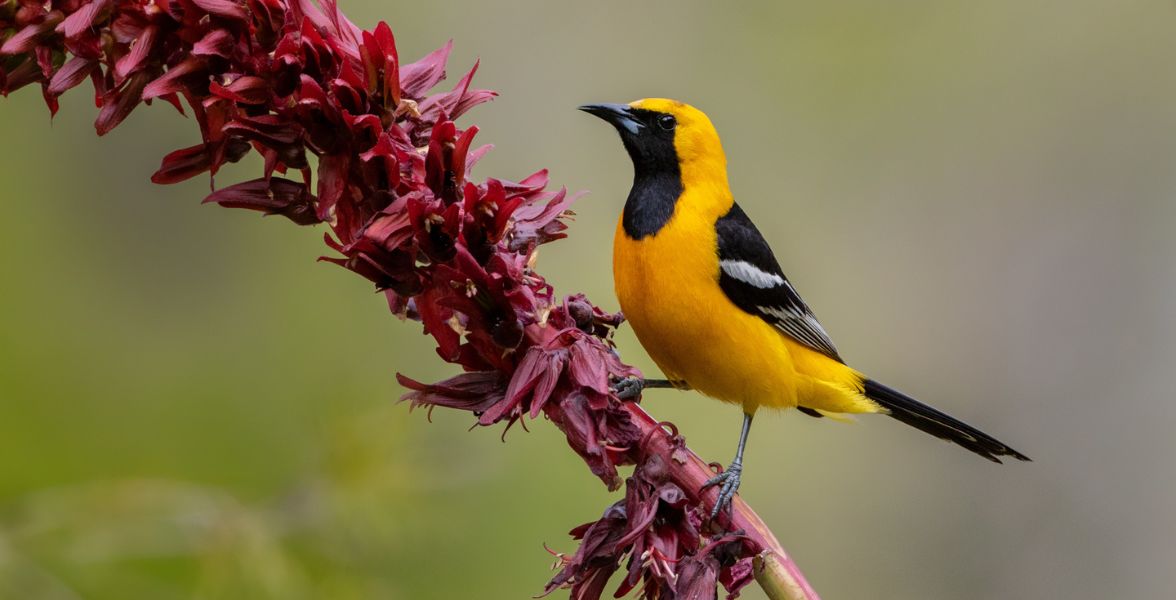
Hooded Oriole. Photo: Donald Quintana/Audubon Photography Awards

Hooded Oriole. Photo: Donald Quintana/Audubon Photography Awards

Summer in Motion: Stronger Together for Birds and Communities

Dear KAREN,

Recently, I watched Hooded Oriole chicks fledge from my yard, dropping down right in front of my feet as they left the nest! From migration and nest-building to incubation and feeding hungry young, these dazzling songbirds have worked hard to bring a new generation into the world.

As peak breeding season winds down and we head deeper into summer, I’m reflecting on the inspiring work happening across California programs to help young people see themselves in conservation. We’re especially excited to celebrate a milestone at the Audubon Center at Debs Park, where 10 FLIGHT interns recently completed the program’s first curriculum-based year.

Over nine months, interns spent about 400 hours learning about California native plants, habitat restoration, and birding; leading bird walks; and caring for restoration sites. Field trips also took their learning beyond the Center, including a pelagic trip where all 10 interns saw seabirds and other marine wildlife for the first time.

This spring, we joined ocean advocates at California Ocean Day alongside members of our Policy and Coasts teams, coastal Audubon chapters, and youth fellows from the Richardson Bay Audubon Center and Sanctuary to celebrate 50 years of the Coastal Act and help envision the future of California’s shores. We also celebrated our 2026 Salton Sea Leadership Program participants as they graduated and continued growing as young conservation leaders for the Salton Sea and the surrounding desert.

And just this week, we welcomed the 2026 Coastal Leadership Program cohort. 10 early-career leaders began a four-and-a-half-month journey into coastal restoration, bird identification, policy, climate change, and community stewardship. 

The sight of those young orioles leaving the nest was a fitting reminder of why we invest in opportunities that help young conservation leaders take FLIGHT.

Andrea Jones
Vice President, California
National Audubon Society 

Keep reading for stories of action, connection, and progress for birds across the state.
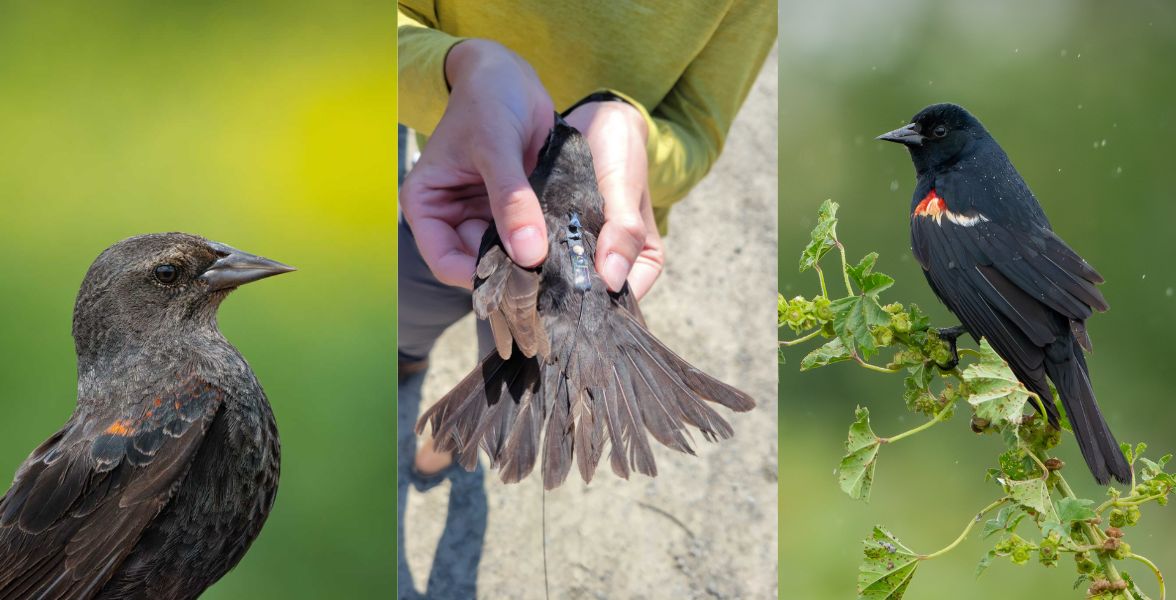
Left to right: Female Tricolored Blackbird, Audubon California biologist placing a Motus tag on Tricolored Blackbird, Male Tricolored Blackbird. Photos 1 & 3: Joe Medley. Photo 2: Jodi Pinder/Audubon California.

Left to right: Juvenile Tricolored Blackbird, Audubon California biologist placing a Motus tag on Tricolored Blackbird, Male Tricolored Blackbird. Photos 1 & 3: Joe Medley. Photo 2: Jodi Pinder/Audubon California. 

Tiny Tags and One Million Tricolored Blackbird Detections! 

What can a million detections reveal? A new look at the grasslands, wetlands, and farms Tricolored Blackbirds need year-round. Discover what our Trikes’ adventures are telling us.

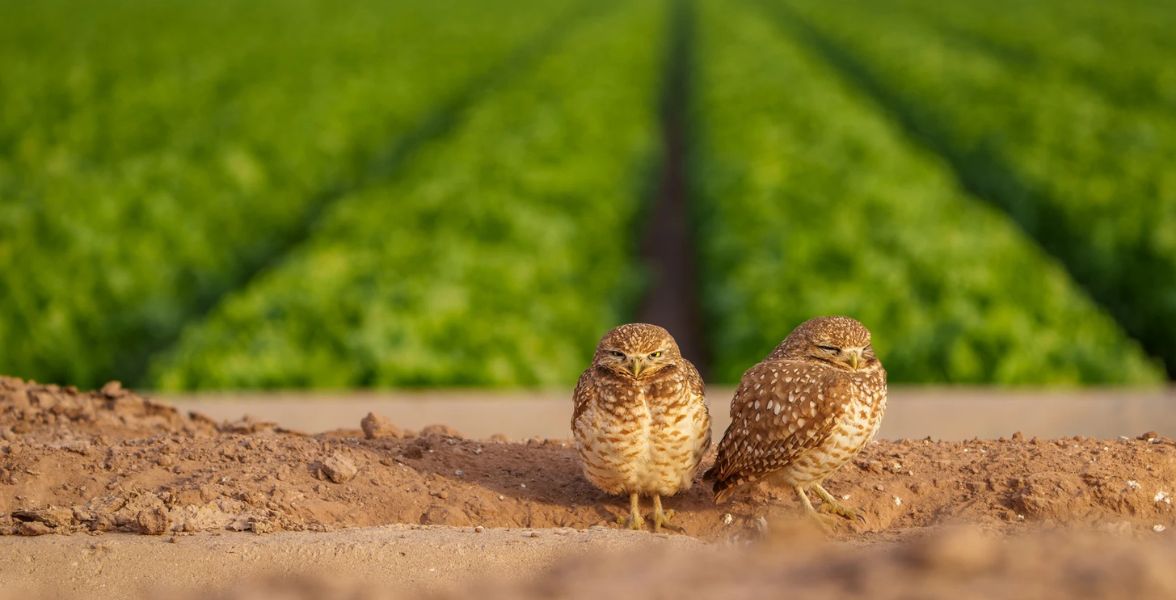
Burrowing Owls. Photo: Paulette Donnellon/Audubon Photography Awards.

Burrowing Owls. Photo: Paulette Donnellon/Audubon Photography Awards.

California’s Conservation Goals Depend on the People Who Carry Them Out 

Protecting birds and habitats takes more than ambitious policies—it takes the people and funding to see them through. That’s why we continued to speak up at the State Capitol for the staffing, resources, and public investments needed to protect birds, restore habitat, and maintain and expand access to nature for communities across California. Read what’s at stake for California conservation.
 

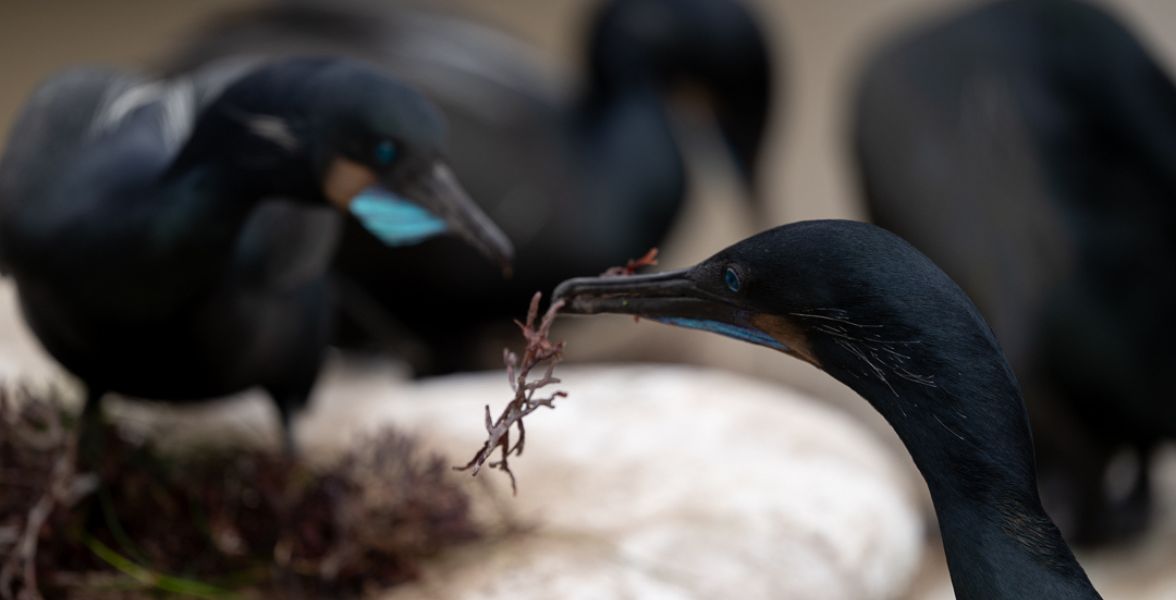
Brandt's Cormorants. Photo: Michelle Mackenzie.

Brandt's Cormorants. Photo: Michelle Mackenzie. 

The Magic of Seabird Colonies, and One Scientist’s Call to Mitigate the Crises They Face

For seabirds, thriving colonies depend on a delicate balance of food, habitat, and safe nesting conditions. Follow one scientist’s work to better understand the pressures these birds face—and the conservation solutions that could help protect them. 

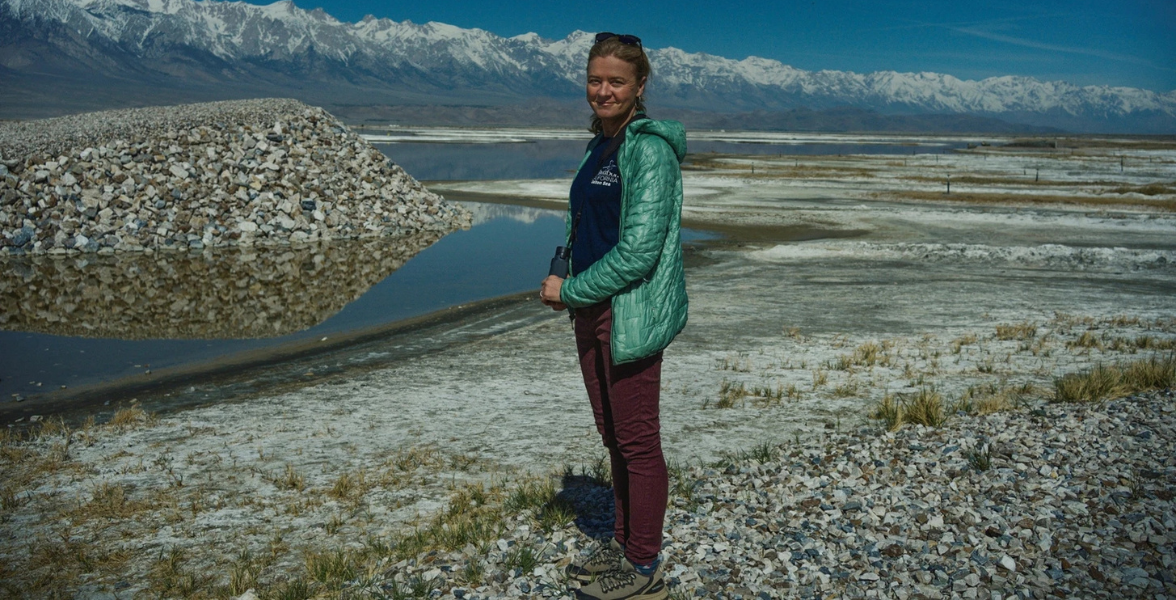
Andrea Jones surveys birds at Owens Lake. Photo: Mike Fernandez/Audubon.

Andrea Jones surveys birds at Owens Lake. Photo: Mike Fernandez/Audubon. 

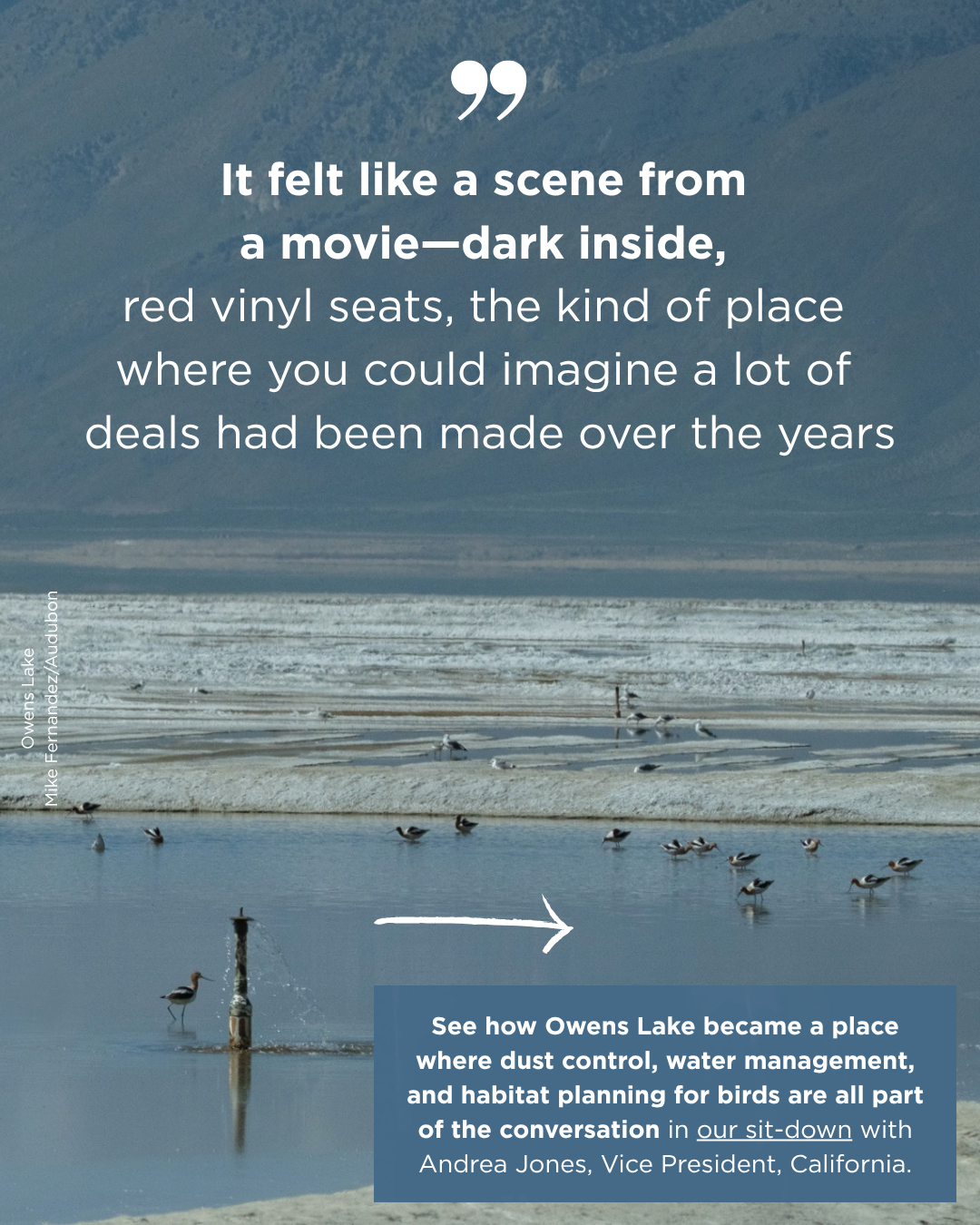
Birds “Falling Out of the Sky,” Red Vinyl Seats, and 30 Years of Conservation 

What does it take to make big conservation wins possible? Andrea Jones reflects on years of deal-making, partnership-building, and persistence, from Owens Lake to BirdReturns’ innovative “Airbnb for birds” model. Go behind the scenes in Andrea’s reflections on 30 years of Audubon California.

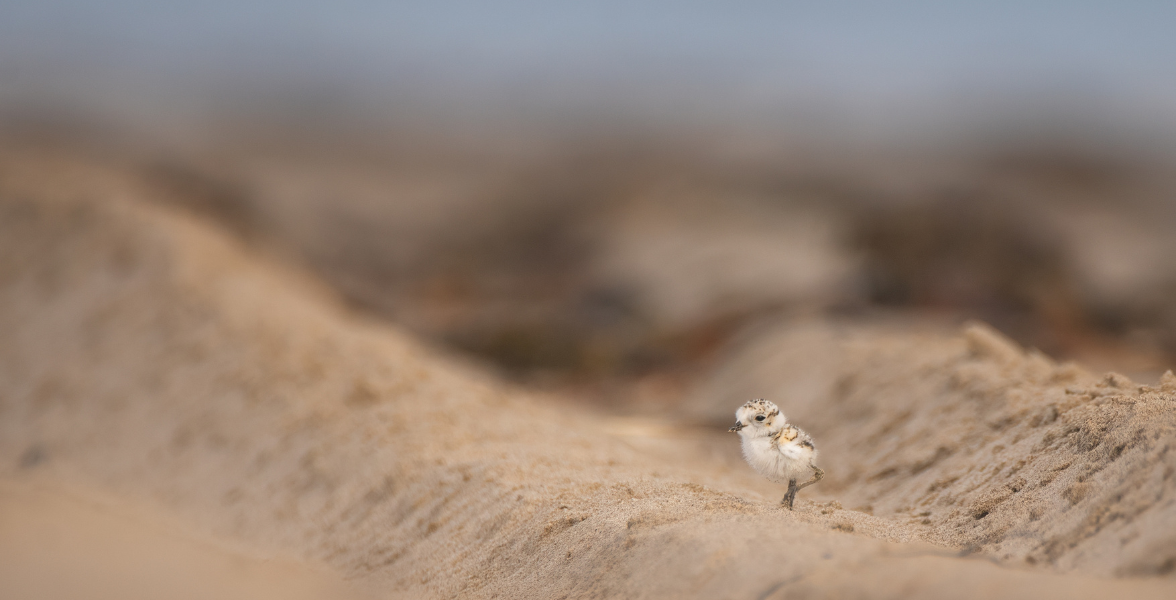
Snowy Plover chick walking atop a tire track in the sand.

Snowy Plover chick walking atop a tire track in the sand. Photo: Alecia Smith.  

Tiny Chicks, Big Challenges: A Safer Start for Snowy Plovers 

Western Snowy Plover chicks start life with a big challenge: finding their own food just hours after hatching. On crowded California beaches, that often means navigating dogs, vehicles, and people. Learn how updated habitat management at Oceano Dunes could help give these threatened shorebirds a better chance at survival.
 

More to Explore

Explore recent stories and updates from across California, including the California Bird Atlas, a community science effort involving dozens of Audubon chapters, plus a look at efforts to expand recreation and community access at the Salton Sea.


Owens Lake. Photo: Mike Fernandez.

Owens Lake. Photo: Mike Fernandez/Audubon. 

Join our community on Instagram! 

This year, we’re celebrating 30 years of Audubon California. Explore our anniversary timeline to revisit the people, partnerships, and conservation milestones that have shaped our work, then follow along on Instagram as we continue the celebration all year long.
 

Don’t see an opportunity near you? Visit our Get Involved page to find ways you can help birds in your area.


Audubon California
1901 Harrison Street, Suite 1450
Oakland, CA 94612 USA
(415) 644-4600 | www.audubon.org/california

© 2026 Audubon California

Update your email preferences or unsubscribe

No comments: